Marriage is God’s plan to celebrate the union of two individuals. This occasion is as happy as it is sacred. This is why there is much value and thought placed on wedding rituals. It’s a special time for the couple. This is because it is on their wedding day that they are both proclaiming their love in front of the world and making a promise through God.

Let’s look at Jewish weddings, the importance of tradition, and how they have carried themselves forward. We will also discuss Chabad Lubavitch, conservative and liberal weddings.
History of Jewish Weddings
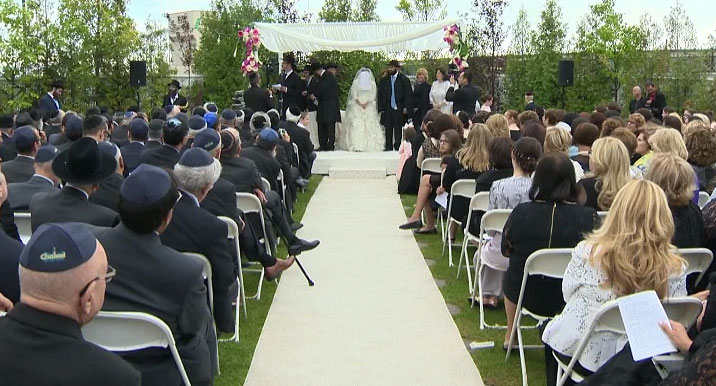
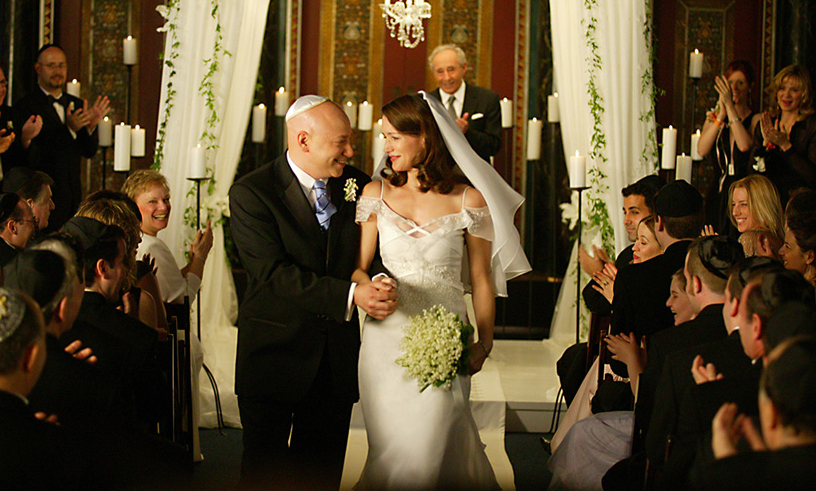
The University of Chicago’s library shares how traditional Jewish weddings were held. Weddings took place in a Chuppah – outside with a canopy situated above the bride and groom. The bride is known as Kallah and the groom as Chatan.
Jewish marriages in the past consisted of four stages, according to StColette.net. The first stage was a pledge or a promise. The second stage was betrothal. The third stage was a wedding feast.
The Torah does not have many mentions of how exactly marriage should take place. Ways to acquire a spouse, how to have a wedding ceremony, and what a marital relationship should be like are all aspects that the Talmud discusses.
Have Jewish Wedding Traditions Changed Overtime?
As important as a marriage is, reform Judaism claims that the Bible does not mention a wedding ceremony. Jewish wedding ceremony rules are written in the Talmud. According to the Mishnah, a marriage would require a marriage contract, and money would be given to the bride, after which the couple would consummate their marriage.
Reform Judaism also discussed traditional Jewish wedding customs. In a traditional ceremony, the bride would circle the groom three times or seven. The glass-breaking ritual was set to be performed after the bride had circled the groom. As time evolved, the glass-breaking ceremony was shifted to the end of the ceremony, and a new meaning was derived from it.
Originally, a Chuppah was a prayer shawl the groom placed over his wife. As time progressed, this was altered to a tent that covered the area and shifted from a veil that should cover the bride.
Liberal, Chassidic, Chabad Lubavitch Weddings
Liberal Rabbis and Jews celebrate same-gender marriages wholeheartedly. Liberal Jews have changed certain traditions of a typical Jewish marriage to make sure there is equality for women.
If you’re attending a Chassidic wedding, you will have to wear a kippah on the top of your head, besides your standard tuxedo. Ladies will have to dress according to modest values of traditional Jewish customs.
In a Chassidic wedding, men and women celebrate the occasion separately. Men celebrate with the groom, and women celebrate with the bride. Chassidic marriages promote the idea of having a family, so expect to see a lot of children. According to Chabad.org, they are not just invited; they’re a solid part of the ceremony.
Chabad Lubavitch believers are orthodox. They focus on concepts of God, the soul, and all that revolves around Jewish commandments. Chabad weddings follow traditional styles and traditional ceremonies.
Traditions
A chuppah plays an essential role in a wedding. Apart from the aesthetics, the chuppah is believed to open the doors of heaven for the couple so that their prayers ascend to heaven.
Judaism considers wine a drink for celebration. Blessing over wine is considered the standard when it comes to Jewish ceremonies. It represents joy and celebration.
The breaking-the-glass tradition is a long-held tradition in Jewish culture. In today’s time, it takes place after the ceremony has ended. Breaking the glass has many meanings. For some, it holds the truth of the destruction of the Temple in Jerusalem. According to Brides.com, it also represents the commitment the couple has made to stand together in trying times.
Brides.com discusses the importance of Mazel Tov! in Jewish weddings. After the glass-breaking ceremony is completed, guests shout ‘Mazel Tov!’ Mazel Tov is loosely translated to wishing someone luck or wishing them congratulations. The actual translation would be wishing someone luck for the future and a profound destiny. Shouting Mazel Tov! is the guest’s way of wishing the couple luck and bliss for the future.

Religious Intermarriages in Judaism
Pew Research discusses the absence of the idea of interracial marriages in Judaism. Pew Research concludes that only 2% of married Jews have a non-Jewish partner or one not associated with Judaism.
97% of Jews surveyed were uncomfortable with their children getting married to a Muslim. 89% felt similar when a hypothetical question was posed about their children marrying a Christian.
Shiksa is a term used to refer to a girl or a woman who is not Jewish. It can also be suggested for a Jewish female who doesn’t practice the religion. This is a modern meaning, though. Learnreligions.com suggests the origin of the term and how it was referred to a non-Jewish woman, yes, but it also means that this particular woman is interested in a Jewish man.
In an article on Jewish-Christian Marriages and Conversions by Bernard Lazerwitz, studies of certain Jewish communities portrayed some demographic figures. The reality is that there is a greater rate of Jewish men intermarrying than Jewish women.
A certain pattern is seen to be followed whereby a non-Jewish woman would convert more in marriage than a non-Jewish man. Surveys in Providence showed that intermarried couples aged 60 or over experienced not a single conversion from non-Judaism to Judaism. However, couples under 40 experienced a 70% conversion rate from non-Judaism to Judaism.
Mikveh
Jewish Learning discusses what a Mikveh is and the importance it holds. In normal terms, Mikveh, also known as Mikvah, is a Jewish ritual bath. Jewish law requires the immersion of an individual in a bath. This process is also used when an individual is converting to Judaism. Niddah, also known as menstrual purity, requires a woman to undergo the process of Mikveh too.
Hasidic is a class of Jews that emerged from the 18th-century mystical revival movement. They are ultra-orthodox. Hasidic men practice Mikveh every day. Some perform it before Sabbath on Friday. Some follow customs and do it before their weddings.
Mikveh is more than just immersing oneself in a bath of water. It holds religious importance and is held in high regard. There are rules to follow with the process of Mikveh:
- The Mikveh should hold enough water to immerse an average-sized body.
- Rabbis ask for the Mikveh to be connected to a source of naturally-occurring water.
Wedding Gowns!
Conservative Jews require the bride to follow a path of modesty. They require brides to wear a wedding dress with long sleeves. The dress should cover the entire arm. If not, then at least three-quarters are the rule. Her shoulders should be covered. It is also recommended that the bride limit her jewelry – all in modesty.
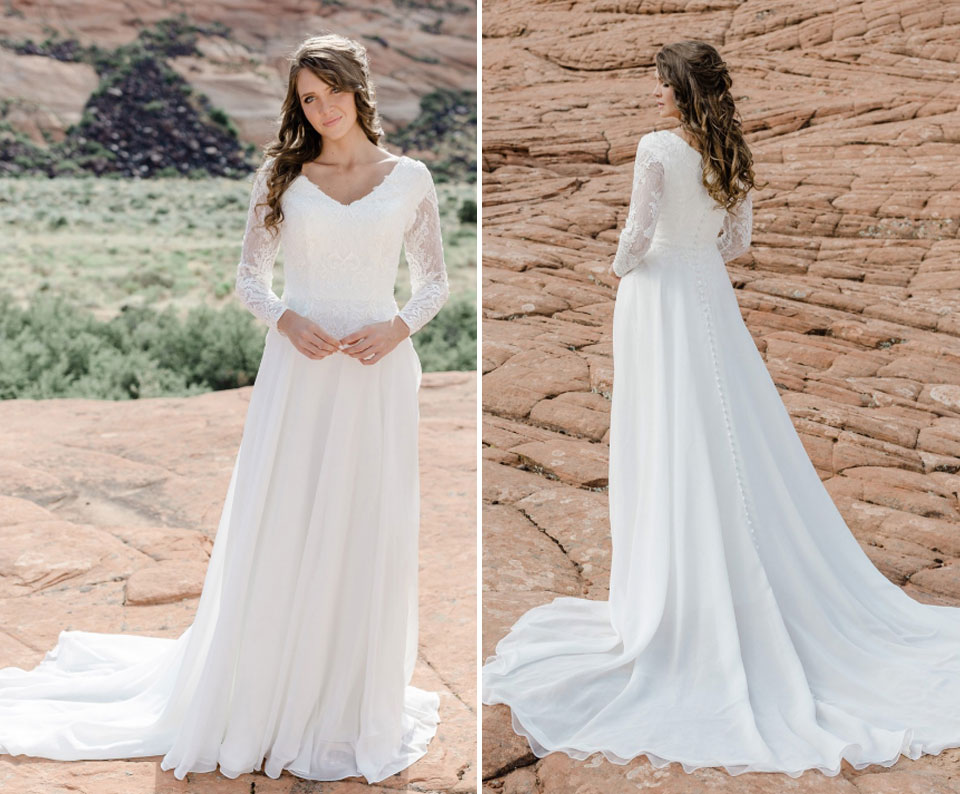
Modest Bridal by Mon Cheri
However, as time has passed, it has given birth to many liberals among us. In this regard, there is room to breathe for liberal Jews. They can wear anything they want, be it sleeveless or strapless. Any wedding dress style is welcomed with joy and positivity.
Fun Traditions
A Jewish wedding is full of traditions but isn’t lonesome or boring. They’re actually pretty fun. For example, the Hora Dance. Hora is a traditional dance that is commonly performed at Jewish weddings. The newlyweds are lifted in the air as their family and friends dance in circles. During the hora dance, the couple holds each end of a napkin to remark their union.
Before the wedding ceremony, the couple is called to be blessed up at the Torah. This is known as an Aliyah. After the Aliyah, the rabbi offers Misheberach. Misheberach is a Hebrew prayer recited for healing and strength.
The Sheva B’rachot refers to the seven blessings. These are read in English and Hebrew. Many family members are a part of this ceremony. The seven blessings start over wine and move toward greater statements.
Wedding Halls
The Beverly Wilshire Hall resides in the Four Seasons Hotel in Los Angeles. It’s an elaborate wedding hall with an exquisite setting. This wedding hall consists of two rooftop terraces. One overlooks the Hollywood Hills from their Royal Suite, and the other goes over the legendary Drive from Rodeo Terrace.
The Waldorf Astoria Monarch Beach is the perfect place to celebrate your wedding! You can choose from an indoor and outdoor setting. Flowers are freshly-cut, tables are laid over with white linen, and iconic chandeliers overlook the gorgeous setting. The wedding hall is accessible to the handicapped. The Waldorf Astoria has on-site accommodations and a reception area.
With a guest capacity of 300+, you know you’ve got yourself a good place.
The most peaceful place to celebrate such a holy union is The Breakers, Palm Beach. The Breakers understand the importance and emotional value of your big day. It provides an elaborate hall. Everything is well-taken care of the florals, the décor, and your wedding is treated as a personal affair.
Conclusion
Jewish culture pays importance to celebrating joy and happiness. Marriage is holy, but a wedding is stressful. However, when couples see each other on the big day, their worries ease into smiles, and a state of celebration is spread across the room.
A wedding is auspicious, so regardless of which sect you’re from or if you’re a part of interracial marriage, enjoy and drink as much wine as you want! It’s your wedding after all!