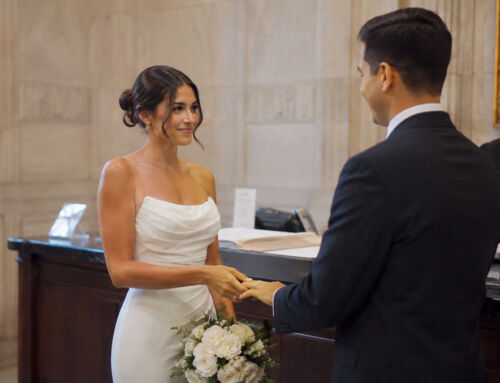
Preserving the elegance of your wedding attire is essential because it is so sentimentally meaningful. You want to make sure it lasts for years to come as a treasured reminder of your big day. This thorough guide is intended to assist you in navigating the crucial procedures and methods for keeping and storing your wedding gown.
To preserve the beauty of your garment, ongoing maintenance is necessary. For spotting any indications of discoloration, mold, or insect damage, routine examinations are essential. The ability to take necessary action and stop future deterioration is made possible by prompt detection
A kind and devoted deed towards the memories it holds is preserving your wedding dress. You may confidently store, clean, and preserve your gown’s classic appeal by adhering to professional guidance. Following these tips will ensure that your wedding dress is preserved as a priceless memento of your most memorable day, whether you choose professional preservation services or a DIY method.

Preparing for Preservation
Before you store your wedding dress for preservation, it’s important to take the necessary steps to prepare it properly. This ensures that your gown remains in the best possible condition over time.
Pre-Cleaning the Dress
Begin by carefully inspecting your dress for any stains or dirt that may have accumulated during your wedding day. Identify the stains and choose the appropriate cleaning method to treat them effectively. Consider the fabric and embellishments of your gown to determine the best cleaning approach. If in doubt, consult with a professional cleaner who specializes in wedding dress preservation.
Assessing Repairs
Thoroughly examine your dress for any signs of damage or necessary repairs. Check for loose seams, missing buttons, or any other issues that require attention. It’s advisable to consult a professional seamstress who specializes in bridal gowns for any repairs or alterations needed. Addressing these repairs before storage ensures that your gown is in optimal condition.

Choosing the Right Storage Materials
Selecting suitable storage materials is crucial for preserving your wedding dress’s quality and appearance. Here’s what you need to consider:
- Acid-Free, Archival-Quality Boxes: Invest in acid-free, archival-quality boxes specifically designed for preserving garments. These boxes prevent yellowing, discoloration, and acidity-related damage that can occur over time. Choose a box that accommodates your gown comfortably without excessive folding or wrinkling.
- Acid-Free Tissue Paper: Use acid-free tissue paper to gently layer between the fabric folds of your dress. This helps to prevent friction, creasing, and potential damage. Place tissue paper around delicate areas such as lace, beading, or embroidery to offer extra protection.
- Cotton fabric for Delicate places: If your gown has any delicate places, you might want to cover them with muslin fabric. The additional layer of protection against dust and light exposure that muslin cloth offers is breathability. To protect fragile textiles or regions with exquisite features during storage, wrap the cloth around those areas.
Proper Storage Techniques
Applying the right storage techniques ensures that your wedding dress maintains its shape and remains well-preserved. Follow these tips for proper storage:
Folding vs. Hanging
Assess the fabric and structure of your gown to determine whether folding or hanging is more suitable. Lighter and less structured dresses may be best folded, while heavier or structured gowns can be hung using padded hangers to support the weight. Be cautious with hanging gowns with delicate fabrics or beading, as they may stretch or become misshapen.
Storage Location
Select a cool, dark, and dry storage area. Avoid locations with extreme temperature swings, bright sunlight, and a lot of humidity. In general, it’s not a good idea to build basements, attics, or garages because of the risk of moisture and pest exposure. For the best preservation circumstances, think about temperature-controlled storage options.
You can make sure that your wedding dress is well-preserved and maintained for years to come by following these preparation, storage material selections, and proper storage practices. You will be able to treasure the memories of your wedding day because your gown will keep its attractiveness.
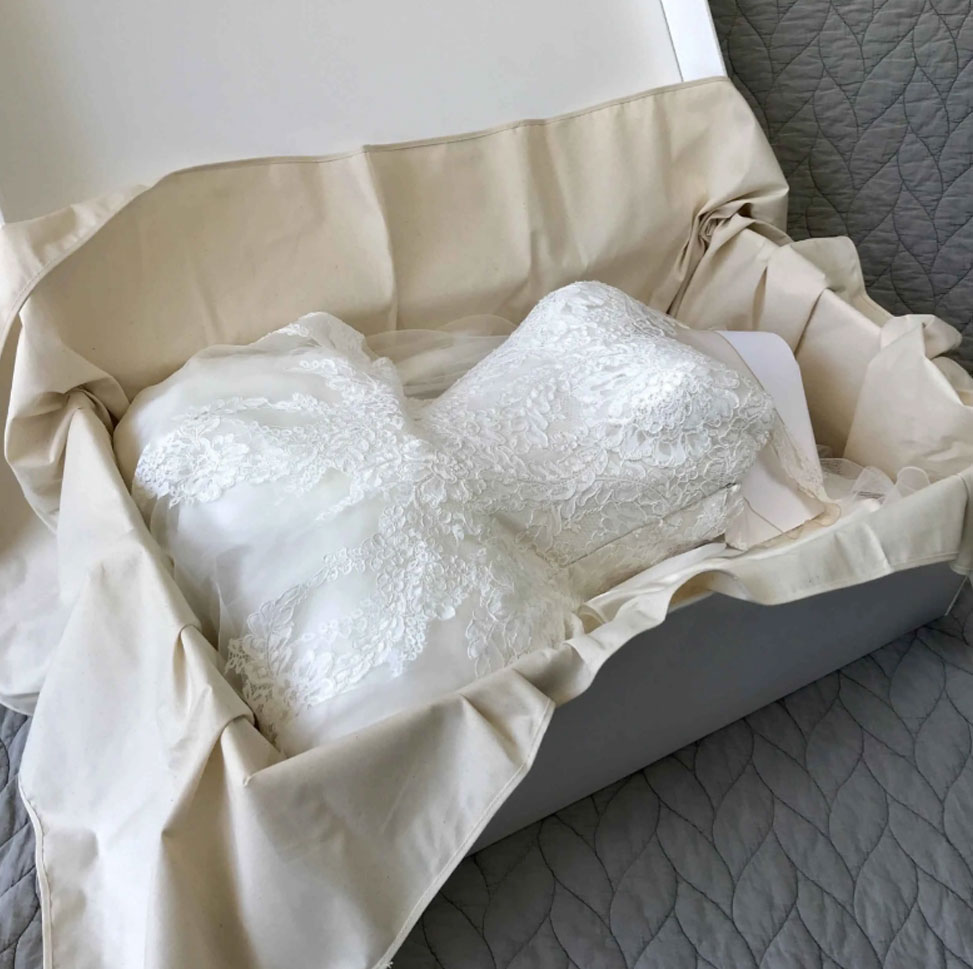
Choosing the Right Storage Materials
Selecting suitable storage materials is crucial for preserving your wedding dress’s quality and appearance. Here’s what you need to consider:
- Acid-Free, Archival-Quality Boxes: Invest in acid-free, archival-quality boxes specifically designed for preserving garments. These boxes prevent yellowing, discoloration, and acidity-related damage that can occur over time. Choose a box that accommodates your gown comfortably without excessive folding or wrinkling.
- Acid-Free Tissue Paper: Use acid-free tissue paper to gently layer between the fabric folds of your dress. This helps to prevent friction, creasing, and potential damage. Place tissue paper around delicate areas such as lace, beading, or embroidery to offer extra protection.
- Cotton fabric for Delicate places: If your gown has any delicate places, you might want to cover them with muslin fabric. The additional layer of protection against dust and light exposure that muslin cloth offers is breathability. To protect fragile textiles or regions with exquisite features during storage, wrap the cloth around those areas.
Long-Term Maintenance Tips
To preserve the beauty of your wedding gown for the long term, it’s important to follow these maintenance tips:
- Regular Inspections: Conduct periodic inspections of your gown to check for any signs of discoloration, mold, or insect damage. Catching these issues early allows for timely intervention and prevents further damage.
- Pest Prevention: Protect your gown from potential pest damage by using appropriate deterrents. Lavender sachets or other natural pest repellents can be placed near the storage area to deter insects.
- Stain and Discoloration Management: Address any stains or discoloration promptly. For difficult stains, seek professional assistance to ensure proper treatment. If you prefer a DIY approach, use mild stain removers suitable for the fabric and test them on a small, inconspicuous area first.
Professional Wedding Dress Preservation
Engaging the services of a professional preservation specialist can offer several advantages:
Expert Knowledge and Experience: Preservation specialists have extensive expertise in handling delicate fabrics, intricate embellishments, and unique gown designs. They understand the specific care requirements for different types of wedding dresses.
Advanced Cleaning and Preservation Techniques: Professional preservation services utilize specialized cleaning and preservation methods that may not be available for at-home preservation. These techniques help to maintain the gown’s original beauty and integrity.
Self-Preservation Techniques
If you want to preserve your wedding dress manually, take the following actions:
Gentle Cleaning: Use gentle cleaning techniques appropriate for your gown’s fabric. Avoid using strong chemicals and aggressive rubbing. Always follow the manufacturer’s instructions or consult professionals for advice.
Proper Packaging: To prevent creasing and scratching, carefully pack your robe in acid-free tissue paper. To protect it from light, dust, and other potential sources of harm, put it in an acid-free, archival-quality box. Use a garment bag to provide additional protection.
Find a place in your home that is appropriate for storing your gown. Select a location that is cool, dark, and dry, away from harsh sunshine, high humidity, and sudden changes in temperature.
Veils and Accessories
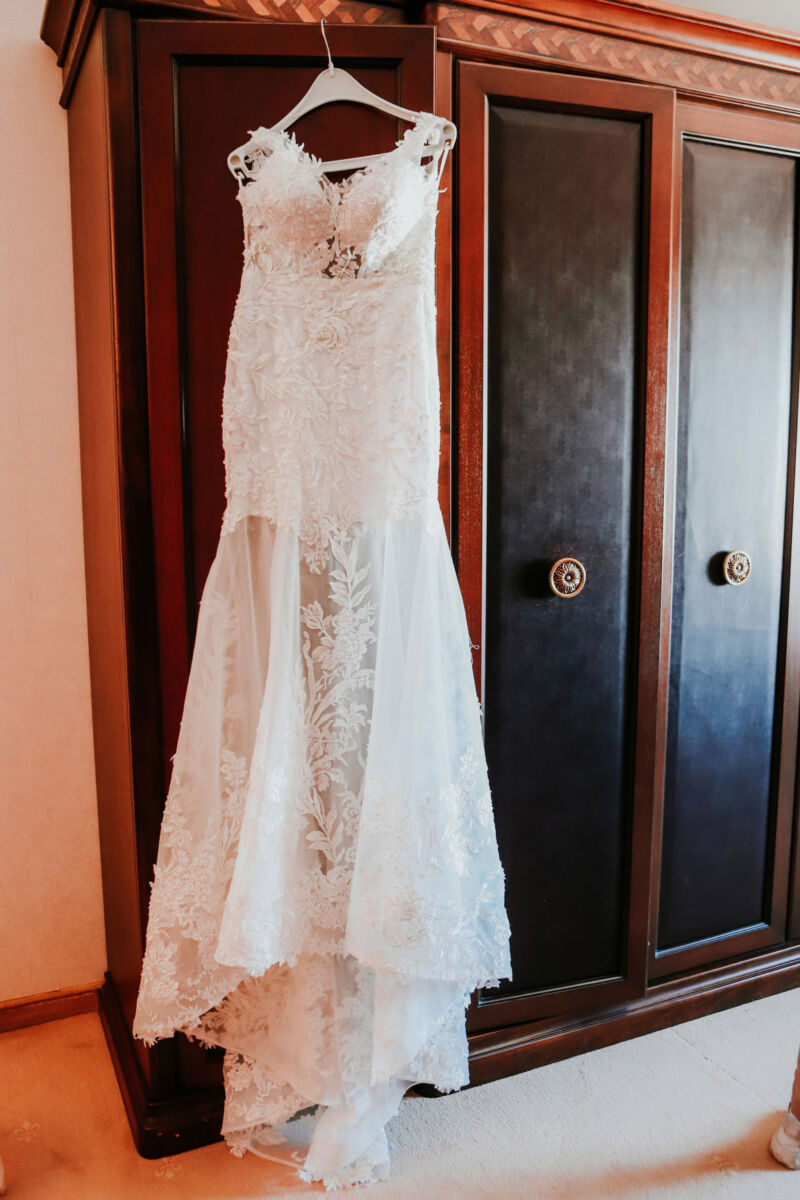
Don’t overlook the jewelry and veils that went with your wedding dress when it comes to maintaining it. To preserve their lifespan, remember these suggestions:
Accessory cleaning and storage advice: Clean any accessories, including belts, sashes, and jewelry, before keeping them. To prevent damage, use cleaning techniques that are appropriate for the material. To avoid scratching or tarnishing, store them separately after cleaning in acid-free pouches or boxes.
Packaging Delicate Veils Separately: Veils with fragile fabrics or complex lacework should be packaged separately and handled with extra care. Cleaning the veil properly depends on the fabric and design of the veil. After cleaning, gently fold the veil and place it in an acid-free box or breathable fabric bag for storage. When storing delicate details, avoid flattening or crushing them.
Periodically Checking on the Gown
Your preserved wedding dress needs regular inspections to stay in good shape.
Checking for Any Changes or Damage: Frequently examine your gown for any alterations, such as color fading, fabric deterioration, or frayed or missing threads. Watch out for pest or mold indications. Early problem detection and resolution will limit future damage and enable prompt repairs.
Making Adjustments as Required: During your inspections, make any necessary adjustments if you find any modifications or damage. For essential repairs, seek the advice of a qualified preservationist or a trustworthy seamstress. To ensure the gown’s continuing preservation, make any necessary modifications to the storage environment or procedures.
Conclusion
Preserving your wedding dress is an act of preserving cherished memories. By implementing the tips and techniques shared in this guide, you can safeguard your gown’s beauty and sentimental value for years to come. Whether you choose professional preservation services or opt for the DIY approach, remember that your wedding dress is a precious symbol of a significant moment in your life, and it deserves the utmost care and attention.