Around the world, weddings are traditions that symbolize a religion or culture, and it’s a beautiful sight to behold. When it comes to Greek weddings, this statement is truer than ever. Greek weddings are filled with customs and traditions, stemming from ancient culture and the Greek orthodox church, and are apparent in every step of the wedding, from the engagement to the making of the wedding bed.
Simply put, Greek weddings are highly particular and enchanting in their ways. Let’s follow Konstantinos & Eleni’s wedding and learn about some Greek wedding traditions we adore.
The Engagement Rings
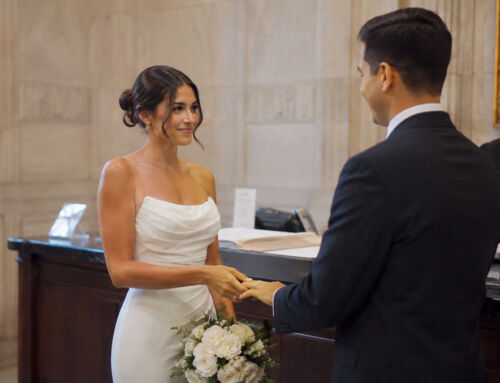
Engagements are a big affair in the Greek tradition, and there are different ceremonies held for it where the family members come to give the newly-engaged couple their blessings. The engagement rings are worn on the left hand, and then the same rings are moved to the right hand once the wedding takes place, which is precisely what the bride and groom did.

This unique tradition stems from the belief that the right hand is the hand that God blesses, and it is the direction people will move to embrace Him. Also, the wedding band should always be closest to the heart.
The Wedding Date
Setting the date is not easy when it comes to Greek orthodox weddings. Konstantinos & Eleni had to be mindful of a few traditional events and ensure their wedding did not take place during that time.
Some of the periods when a Greek wedding simply cannot take place include Great Lent, the two weeks before the Dormition of the Theotokos on August 15, the 40 days leading up to Christmas, and the first two weeks of August as they are devoted to celebrating the Virgin Mary.
Some particular dates should also be avoided at all costs, such as August 29, which marks the death of Saint John the Baptist, and September 14, which is the celebration of the Exaltation of the Holy Cross. Some couples also follow the tradition of waiting a year for the wedding when a loved one passes away to pay their respects.
January is considered the best month for a Greek wedding as, in ancient times, it was dedicated to the wife of Zeus, Hera, the goddess of marriage and fertility. Thus, the bride and groom picked January 14th as their wedding date.

The Koumbaro and Koumbara
After the wedding date was finalized, it was time to pick the best man and maid of honor, or in the Greek tradition, the koumbaro and koumbara. According to Greek customs, the sponsors of the wedding are not picked. Instead, first, the groom’s godparents and then the bride’s godparents are consulted; if they are not able to do it, the responsibility falls to close family members or friends.
In ancient customs, the role of koumbaro and koumbara is taken very seriously. They take part in the ceremony and baptize the first child of the couple.
Making The Marital Bed
Fast-forward to the night before the wedding, another unique Greek wedding tradition took place, and it involved preparing the marital bed. This responsibility also fell on the koumbaro and koumbara, and close friends and family members were invited to prepare the bed.
The tradition started with the bride’s mother, grandmother, and attendants preparing the bed and then spreading flowers, money, rice, and koufeta on top as a symbol of good luck and fertility.
A child was also rolled across the bed to bless the bed and couple with fertility. According to ancient superstitions, the gender of the couple’s first child depends upon the gender of the child placed on the bed.
Dressing The Bride And Groom

The day of the wedding was finally here, and it started with the koumbaro and koumbara helping the groom and bride get ready.
For the groom, the koumbaro and close friends shaved the groom’s beard as a sign of trust. Then, they helped the groom get dressed by putting on his jacket, buttoning his shirt, and putting a piece of iron in his coat pocket to ward off evil spirits. These are all symbolic traditions and a big part of a Greek orthodox wedding.
Now, it’s time for Eleni to get ready. The koumbara or maid or honor accompanied the bride throughout the ceremony and, along with the bride’s close friend, helped her get ready. The bride’s friends followed the much-cherished tradition of writing all the single ladies’ names on the bottom of the bride’s shoe as a sign of good luck. By the end of the day, the names that have worn off will signify the next in line to get married.
The bride wore a beautiful white princess-cut dress adorned with white flowers, spanning from the bodice to the full length of the skirt. The veil had lace embroidery and looked extraordinary.
The mother of the bride wore a Jovani dress from the evening collection, and the Mother of the groom wore a dress by the Turkish designer Tarik Ediz.
As per tradition, the groom arrived at the church before the bride and was waiting for her with a bouquet. The bride’s father gave her to the groom, and together, they walked inside the church.
The Wedding Ceremony
As the couple walked into the church toward the priest, a table was placed on the side, with the Stefana, rings, Bible, and wine on it. The ceremony started with the couple placing their engagement rings on the tips of their fingers. The koumbaro exchanged them three times, and then the priest gave this blessing three times.
The stefana, delicate crowns that are placed on top of the bride’s and groom’s heads, are also an important Greek wedding tradition. The crowns are joined together by a ribbon which symbolizes unity and is blessed by the priest in the name of the Father, Son, and the Holy Spirit.
After the crowns were placed on the bride’s and groom’s heads, the koumbaro swapped them three times, which is a symbolic demonstration of the couple and the koumbaro’s bond. The priest joined the couple’s hands and blessed the stefana.
After that, the priest poured wine into a single cup, and the bride and groom took three sips each, showing their commitment to sharing a life forever. Then, the couple was led around the altar three times by the koumbaro as the priest recited a Greek prayer. After the final blessing was given, the stefana was removed.
The bride and groom exited the church to greet their guests. Rice, koufeta, and flowers were thrown to the newlyweds as symbols of wealth and fertility.
The Wedding Reception
At the wedding reception, the bride and groom graced the dance floor first with their first dance. Parents, family members, and friends took turns dancing and pinned money on the bride’s and groom’s attire or tossed them on the dance floor to congratulate the couple on their wedding.
After that, other traditional Greek wedding dances took place. You had the Kalamatiano, where the bride and her maid of honor and friends danced together in a circle. Similarly, the groom and his friends performed the Zeibekiko, a similar circle dance.
At the end of the wedding ceremony, small gifts called Bomboniere were given to the guests. This included koufeta, sugar-coated almonds, symbolizing sweetness, strength, purity, and fertility.
Bottom line
Greek orthodox weddings are filled with various traditions, some forgotten and some lasting generations. We hope this article gave you an insight into Greek weddings and what each tradition signifies. Looking for the perfect dress to wear to a Greek wedding? Check out Madame Bridal.